Beginning
Whole climbing subtlety within state-of-the-art machines presses for an intensive awareness of diagnostic apparatuses, primarily with respect to On-Board Diagnostics II (OBD2) and Tire Pressure Monitoring Systems (TPMS). Throughout Europe, Asia, and the US, these innovations perform using diverse frequencies. OBD2 rules are largely aligned globally, essentially utilizing ISO 9141-50, KWP2000, CAN, and others, but regional applications can introduce minor variations. TPMS, however, is where considerable frequency contrasts manifest. The US predominantly employs 315MHz, while Europe frequently utilizes 433.92MHz, and Asia presents a more heterogeneous range including both frequencies and supplementary bands. Hence, exact diagnostic instruments must be furnished with the potential to process these multiple frequencies to aid effective servicing and maintenance.
Analyzing TPMS Sensor Frequencies: A Global Guide (Europe, North America, Asia)
Apprehending tire sensing unit (TPMS) sensor frequencies along the sphere turns out to be intricate. Normally, North states mostly utilize 315 MHz, despite some novel vehicles exploit 433 MHz. On the other hand, Europe and most of Asia typically operate on the 433 MHz bandwidth, with some district variations occurring particularly in identified Asian states. Hence, vital to prove the true wavelength before buying into TPMS gauges to make certain compatibility and sidestep likely issues.
Electric Car Diagnosticians: OBD2 Compatibility and TPMS Integration
Cutting-edge EV ride analyzers are increasingly integrating fundamental functionality, especially regarding both conventional On-Board Diagnostics II (OBD2) interface and Tire Pressure Monitoring System (TPMS) merging. Countless electric rides utilize OBD2 ports for retrieving critical system information, authorizing technicians and users to diagnose possible errors. Furthermore, unified TPMS attachment provides reliable tire stress values, fostering to improved defense and diesel conservation. This integration of OBD2 connectivity and TPMS operability symbolizes a important breakthrough in EV motor vehicle examination.
TPMS Frequency Contrasts: European Region vs. This Region vs. Asian Region - A Elaborate Inspection
Several technologies responsible for measuring tire volume—TPMS—operate on special radio bands, leading to substantial regional disparities. US predominantly utilizes 315 MHz, though some modern vehicles are shifting to 433 MHz. Eurozone mandates 433.92 MHz, a fixed frequency to guarantee consistency across territories. Asian Region exhibits a more complex landscape, with several regions using 315 MHz, others 433 MHz, and still additional areas employing a aggregation of both. This disparity poses challenges for garages and car users when dealing with replacement TPMS detectors or diagnostic technology, necessitating careful verification of regional requirements to prevent malfunctions and promote proper working of the TPMS.
OBD2 Scanners for Electric Vehicles: TPMS Diagnostics & Frequency Decoding
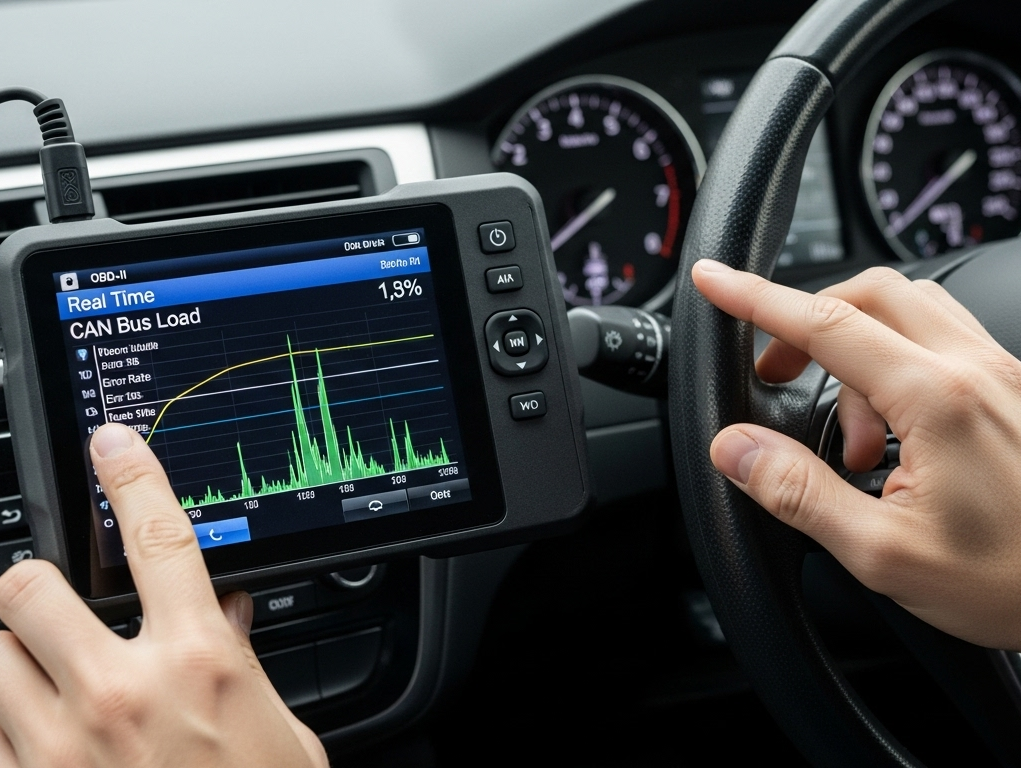
Modern OBD2 scanners are increasingly expanding to support battery-operated vehicles, mainly regarding TPMS diagnostics. Unlike internal combustion engine vehicles, electric cars present unique problems when it comes to tire pressure system diagnostics. Many EVs use distinct tire pressure diagnostics transmissions requiring the instrument to exactly identify the frequency in use. This potential grants specialists to just read inflation levels but also trace the specific frequency being beamed by the monitoring network devices, aiding in undiagnosed assessment of problems.
The US Tire Pressure Monitoring Systems Frequencies: What Have to Get?
Managing the world of vehicle TPMS can be a obstacle, primarily due to the varying spectra utilized across the continent, Asia, and the United States. European vehicles predominantly use 433.92 MHz, while diverse Asian countries employ 315 MHz and 433.92 MHz, creating a complicated situation for technicians. In the US, both 315 MHz and 433.92 MHz are popular, with 315 MHz being more typical. So, understanding these regional disparities is essential for accurately resolving TPMS issues and selecting the fitting programming tools.
Past such Primary Elements: Car Diagnostics, Electric Motors, and Tire Gauge System Device Transmission Identification
Regarding competent car experts, just apprehending specific essential principles related to vehicle diagnostics, voltage-powered machine architecture, alongside tire pressure monitoring instrument radio wave identification means particular important further milestone. The former areas venture around introductory diagnostics, demanding customized implements & understanding so as to rightly spot or repair challenging obstacles dependent on tire air, electric framework capacity, together with mechanical system snag codes. Moreover, accurately distinguishing wheel pressure systems equipment channels – generally range amid alternative brands together with categories – can be necessary for proper synchronization.
Electric Auto Inspection: Using OBD2 Scanners to Troubleshoot TPMS
Inspecting Tire Pressure Monitoring Systems wheel pressure systems in electric vehicles battery vehicles often calls for more than only visual inspection. Modern OBD2 diagnostic tools offer the ability to access TPMS data and diagnose potential errors. Utilizing these machines, technicians can assess fault codes, inspect sensor performance, and even perform sensor tests, allowing for prompt diagnosis of pressure sensor defects and minimizing service disruption. These is especially essential given the widespread complexity of EV systems.
Interpreting Tire Pressure Monitoring Systems Bands: A User's Briefing for European Region, Eastern Asia, and the Continent
Successfully running wheel pressure devices throughout Europe, Asian Continent, and North American Zone demands a full familiarity of the different spectrum allocations they apply. Distinct from a even system, the world generally conforms to specific spectrum allocations. Example being Continental Europe primarily utilizes 315 Megahertz and 433 tpms sensor frequency europe north america million nine hundred twenty kHz, while North American Region commonly relies on 315 MHz while some newer vehicles would adopt four hundred thirty-three point nine two MHz. Asian Subcontinent displays a richer complexity landscape, with a range of frequency ranges applied, in accordance with the region and automotive company.
- Consider territorial statutes regarding wireless frequency.
- Refer to your owner's handbook for clearly stated band.
- Employ a diagnostic tool built for interpreting numerous bands.