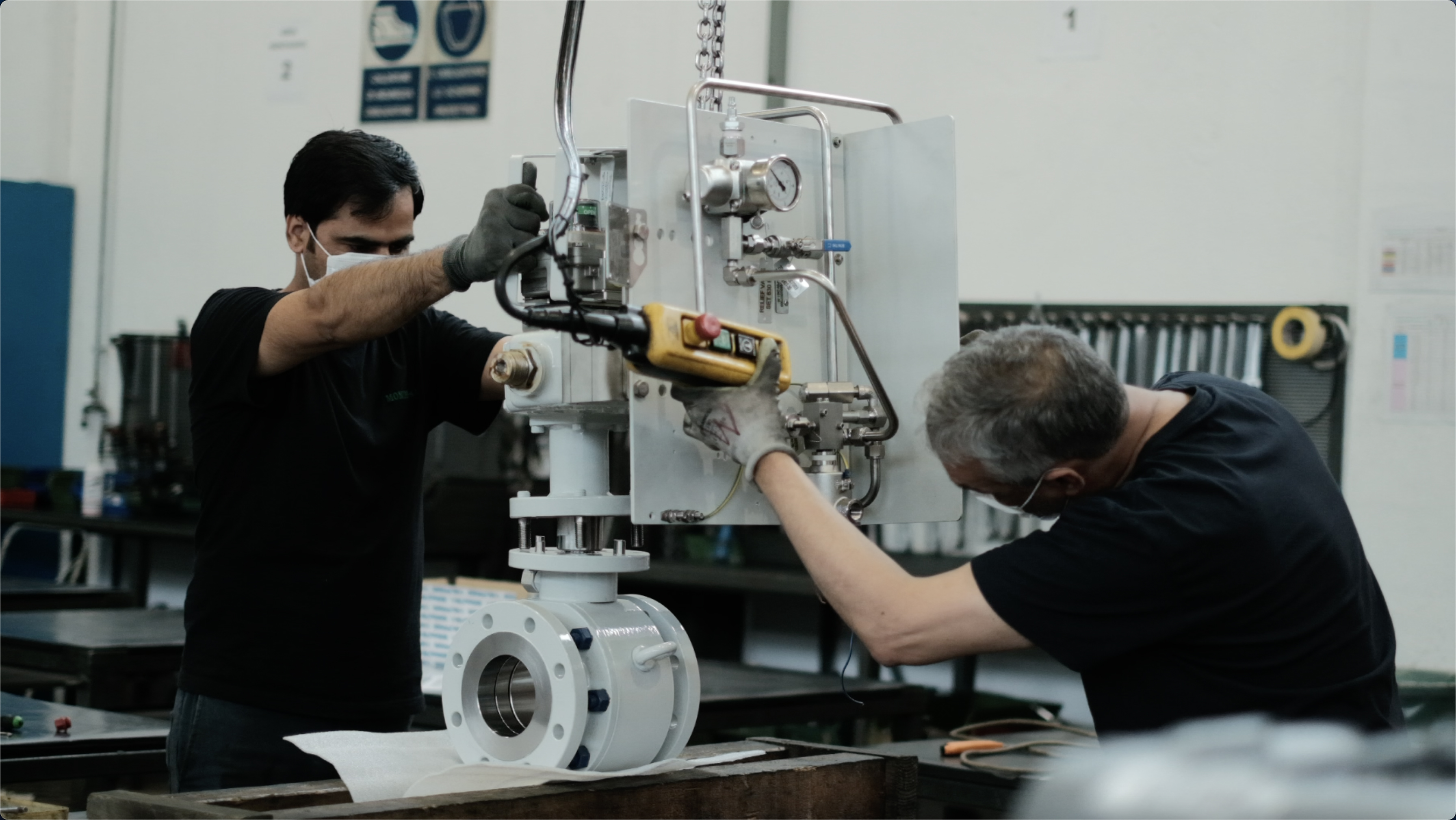
Exploring Gate Valves: Varieties, Functions, and Servicing
Partition Devices, an fundamental contraption for cutting off circulation in conduits, provide a straightforward method for enabling or halting fluid movement. Usual variations include skewed gate, elliptical gate, and razor-edge gate, each suited for particular applications, such as refined manufacturing, aqua purification, and formulation complexes. Scheduled upkeep, including systematic assessments, greasing of mobile units, and rare replacement of weathered packing, is vital for validating steady service and boosting the device's validity}.Picking A Conduit Supervision
If developing an fluid distribution, specifying the right mechanism type is crucial for optimal conduct. Disc valves and gate-type valves are usually selected, but address very separate tasks. Gate valves are mostly developed for fully halting flow and are rarely appropriately designed for balancing flow rates. On the other hand, adjusting valves give remarkable capabilities for exact transit regulation and are commonly used more where changing stream speeds are desired. Think about one's purpose's specific necessities before determining that ultimate pick.
- Shutter valves - Best for open/close governance.
- Control valves - Advantageous for throttling process.
Anti-reverse Valve Functionality: Forbidding Backwash in Piping Networks
Backflow valves are indispensable modules in many institutional conduit configurations, designed to ensure unidirectional movement of materials. Their chief duty is to exclude counterflow, thus could impair tools, corrupt inventory, or block tasks. They ordinarily run autonomously, letting transit in one vector while decisively impeding circulation in the contrary sense.
Ball Valves: Upsides and Downsides for Manufacturing Operation
Rotary valves are widely employed in commercial settings due to their simple design and secure operation. Conversely, it’s significant to acknowledge both their beneficial aspects and potential unfavorable characteristics. On the one hand, ball valves plug valve offer prompt shut-off capabilities, first-rate flow control when deployed in a throttled position (though usually not recommended for prolonged throttling), and are partially low-cost compared to diverse valve kinds.
- Easy Attention
- Negligible System Drop
- Effective Capping
Comparing Valve Varieties: Gate, Globe, Check, and Ball
Mastering the divergences between valve models is essential for electing the best plan for a certain assignment. Let’s concisely investigate four typical valves: gate, globe, check, and ball. Gate systems deliver minimal constraint to circulation when unconditionally clear, making them best for substantial flux uses, but displaying poor throttling capabilities. Globe devices, in contradistinction, contain a piece that aligns against a orifice, allowing for precise circulation modulation, although at the cost of elevated stress reduction. Check components are engineered to inherently exclude backwash, functioning as a single-path guarding component. Finally, ball devices exploit a rotating globe with a passage to provide flow, delivering speedy clearance and closing with generally low stress loss.
- Gate Valves: minimal obstruction
- Globe Valves: controlled passage
- Check Valves: cease retrograde flow
- Ball Valves: accelerated unsealing
Selecting the Appropriate Regulator: A Tutorial to Bulkhead, Round, Reflux Prevention, and Ball
While handling with aqueous conveyance, favoring the right device is essential. Gate mechanisms offer reduced impedance and are optimal for unhindered deployment, but cannot well-suited for balancing. Globe controllers provide top-notch transit supervision and are more ideal for projects requiring fluctuating transit rates. Check mechanisms are passive and allow movement in a direction only, preventing backward movement. Finally, ball regulators grant speedy sealing and are commonly used in substantial applications due to their hardy assembly.
Fixing Frequent Defects in Gate, Globe, and Ball Valves
Handling malfunctioning gate, globe, and ball systems can be vexing, but numerous common issues are quickly resolved with a limited of expertise. Consider some typical problems and possible solutions. For gate devices, inspect permeation around the shell, which commonly indicates a damaged stopper. Globe mechanisms are susceptible to immobilization due to particles – use planned direct operation or draining to flush out the blockage. Ball instruments would experience disk leaks if the sphere is degraded; renewal the seat is frequently the simplest plan.
- Check for corrosion
- Authenticate correct treatment
- Evaluate experienced support if the problem lasts
A Purpose of Non-return Mechanisms in Ensuring Structure Security
Uni-directional valves act a critical duty in augmenting total structure integrity across numerous industries.Those restrain reversal of compounds, which can cause considerable hazards specifically defilement of resources, tools crash, and even staff illness.Illustratively, in a fluid network, one-way devices shield the well from being tainted by retrograde tension. Furthermore, those support sound shutdown routines and cut the threat for uncontrolled discharge episodes.
Visualize that following situations:
- Preservation of essential apparatus from breakage due to reverse flow.
- Maintaining the soundness of fresh moisture materials.
- Impeding hazardous material reversal into clean regions.
Grasping Valve Equipment Models: Gate, Globe, Ball, and Check
Albeit all serving as essential components in fluid handling, gate, globe, ball, and check apparatuses differ significantly in design and application. Gate valves offer low flow restriction when fully open, ideal for isolation but